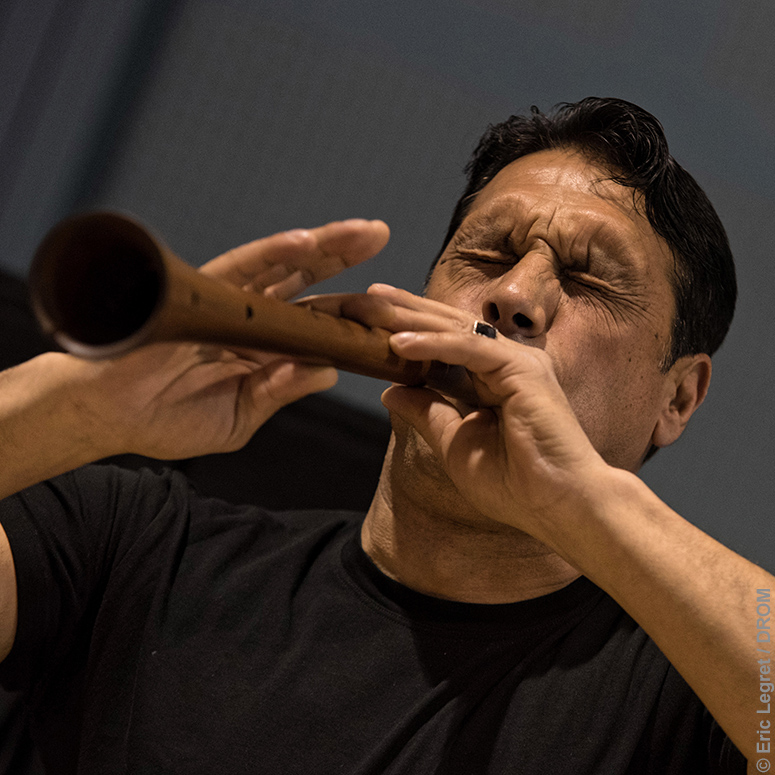
A major artist, a cultural bridge-builder, and a committed humanist, Erik Marchand leaves behind a profound and lasting legacy, both in Brittany and far beyond.
Erik possessed a rare and precious vision: that of a living, rooted, and open culture, attentive to folk traditions as much as to dialogue between peoples. From the village to the global stage, he tirelessly championed a deeply respectful, curious, and humanist approach to world cultures.
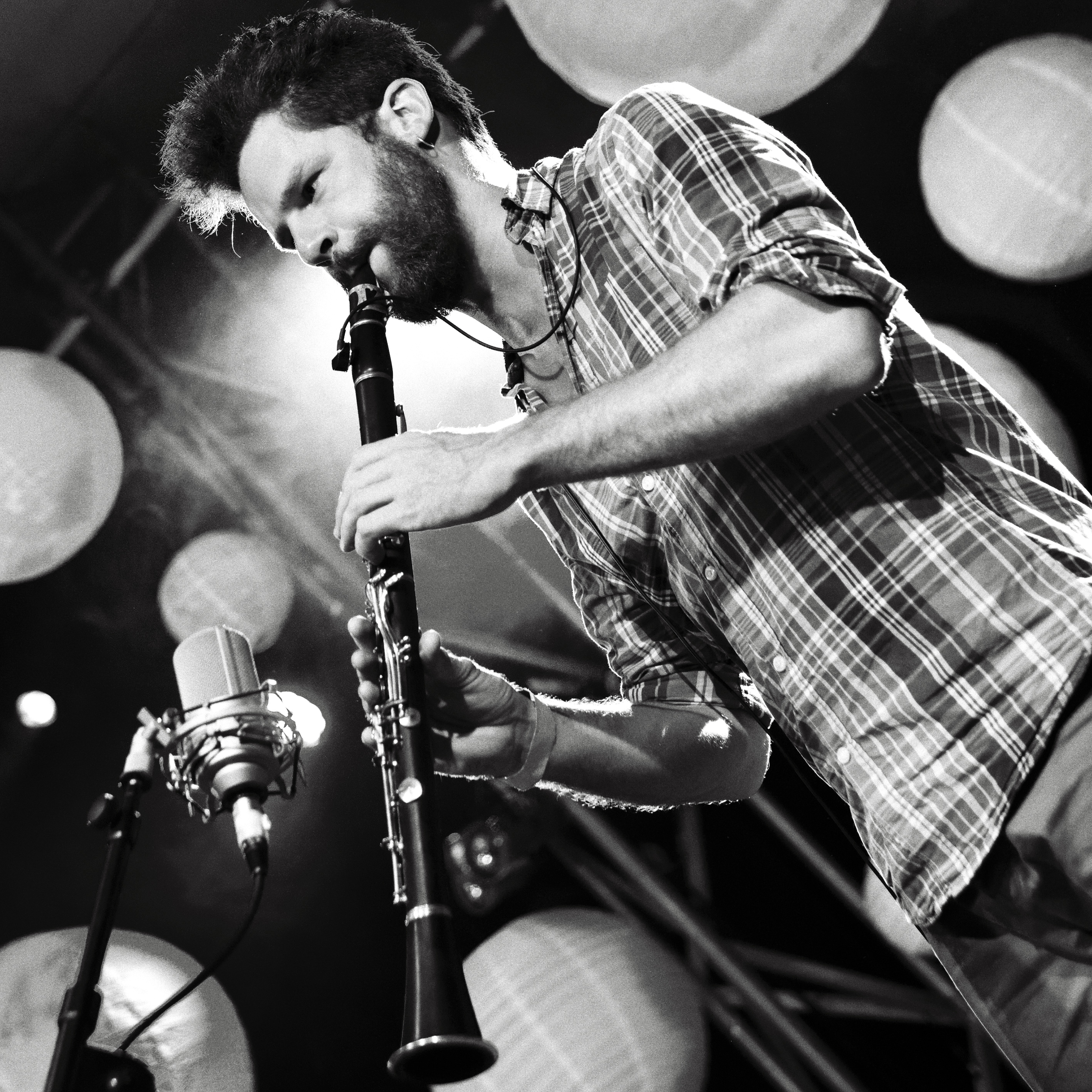
A singer and former clarinetist, Erik Marchand was one of the architects of contemporary Breton music, whose evolution and rich musical diversity were conceived philosophically.
Born in Paris to a family partly from Quelneuc (in the Gallo-speaking region of Morbihan), he spent his childhood between a grandfather who sang and a father who played the guitar. A lover of world music, he discovered, during his adolescence, a recording of a fest-noz (traditional Breton dance party) given to him by his father. It was a revelation.
Wishing to transmit the modal understanding of Breton music, of which he was one of the few specialists, he created Kreiz Breizh Akademi in 2003, a popular academy of modal music in Central Brittany. One of the academy's objectives was to offer a particular orchestration style where arrangements were developed around a modal system (modality, still present today, was the predominant system in Breton folk music until the mid-20th century).
This work continued the transmission he had begun during numerous Breton music workshops, which he led notably with Marcel Guilloux.
He was the artistic and educational director of Drom and the initiator of the Modality Hub, an international tool for reflection, creation, and research on modal music, bringing together performers, composers, instrument makers, instrument builders, educators, and musicologists in various musical styles.
Singer, musician, researcher, and tireless creator, Erik Marchand dedicated his life to Breton and modal music, while actively exploring its intersection with other traditions, particularly those of the Balkans, the Mediterranean, and the East.
His artistic work was always accompanied by a strong commitment to passing on his knowledge. Through Drom and, more specifically, Kreiz Breizh Akademi, he trained, mentored, and inspired several generations of artists, encouraging artistic excellence, attentive listening, respect for historical sources, and creative boldness.
Until the end of his life, Erik Marchand worked with passion for creation, transmission, and dialogue between cultures, leaving behind an immense artistic and human legacy.