Association DROM
24 rue de Gasté
29200 Brest
09 65 16 71 21
recherche@drom-kba.eu


Educational portal for Modal Music

France

Ton Duro – Dañs ‘dro Fisel

  • Genre :
    Popular music from Central Brittany
  • Tradition :
    Treujenn gaol clarinet, Brittany
  • Piece name:
    Ton Duro – Dañs ‘dro Fisel
  • Specifics:
    Fisel dance


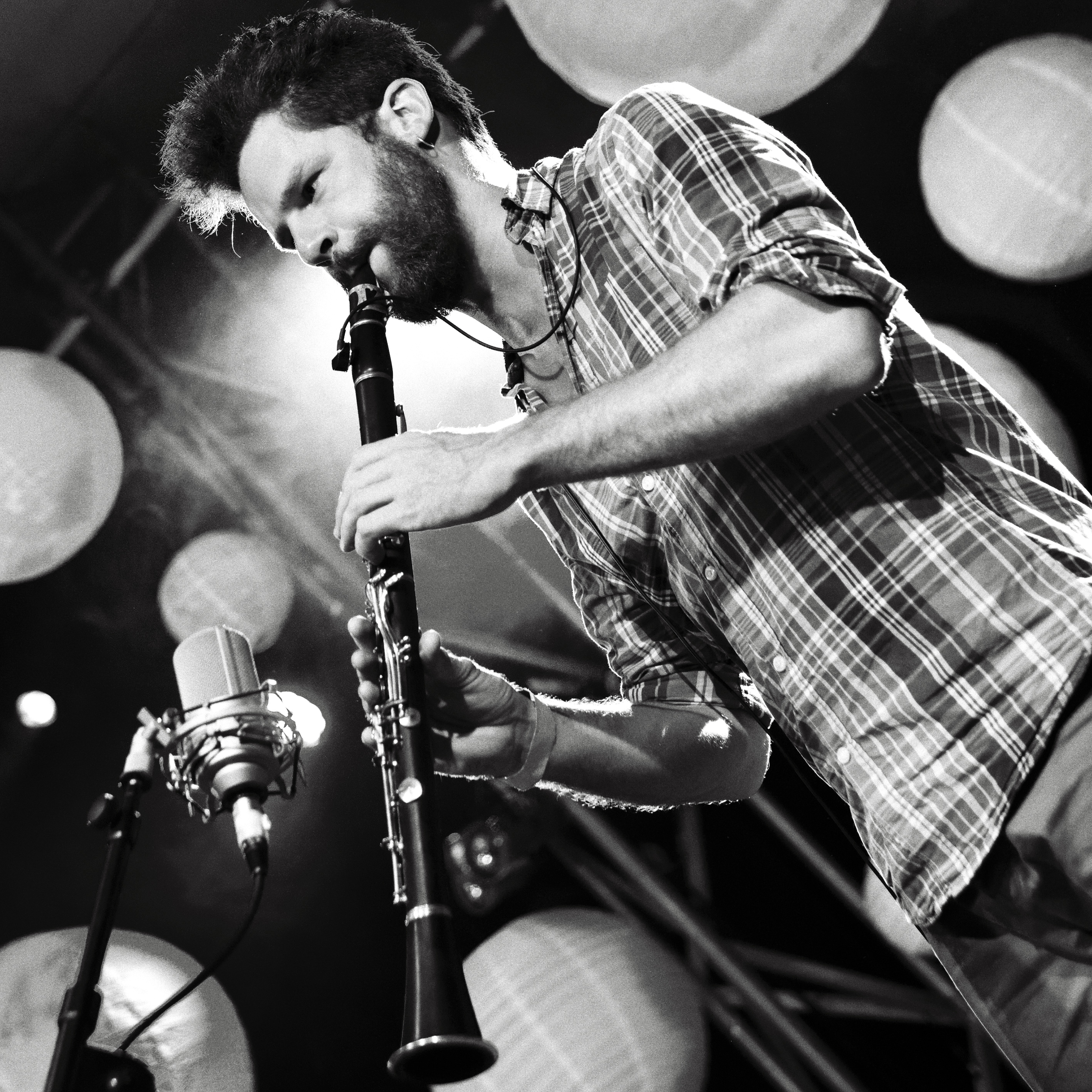
In Central Brittany and particularly in the Fisel region, the clarinet or treujenn gaol (literally: "the cabbage trunk", local nickname) occupies a special place in the tradition of bell ringers. The most used is the old clarinet in B flat with thirteen keys. Its techniques and playing practices are particular.

Christian Duro, a renowned musician from the Fisel region, has developed a treujenn-goal game that is both individual and rooted in the tradition of the Fisel region.

We propose to go and meet his art and the traditions of the Fisel country based on a piece from a Fisel dance suite:

Ton Duro – Dañs ‘dro Fisel

performed at the Treujenn Gaol by Christian Duro and Erik Marchand.


General presentation

This is the first piece of a fisel dance, which normally consists of three (one dañs ‘dro, one ball, another dañs ‘dro). Here, it is a piece known as Ton Duro, in reference to Christian Duro’s uncles and fathers, who personalised this tune and made it famous. The third piece of this dance, in fact a suite of two melodies: “Ton Jean Henry ha ton Marcel Duro”, will also be studied.

These two pieces are taken from the album “Christian Duro. Sonneur Fisel” (Coop Breizh /Paotred an Dreujenn-Gaol, 1997).

To present these melodies, Christian Duro answers Erik Marchand’s question: “what are these two tunes?”. To do this, he describes how he experiences and sounds “this music that we make here”.

Tradition: transmit and feel, not reproduce.

“When you become a sonneur by chance, you only expect from music the pleasure of practicing it with your friends. When you receive it as an inheritance, it marks your memory. When it gives rise to unexpected – or unhoped-for – encounters, it reaffirms its existence. If I give back to it what it gives me, then it is worth sharing.”
Christian Duro, lyrics for the album “Christian Duro. Sonneur fisel”, CoopBreizgh/Paotred an Dreujenn-Gaol, 1997.

NB: When we talk about the “first piece”, we are talking about Ton Duro, and when we talk about the “last”, we are referring to “Ton Jean Henry ha ton Marcel Duro”.

Expressing musical personality in a couple of sonneurs

What is musical personality, how is musical individuality expressed, according to Christian Duro?

He shares his experience and evokes two very well-known sonneurs from Central Brittany: Iwan Thomas and Lucien Riou.

NB: Note that the terms kaner and diskaner refer to the singers of kan ha diskan, a duet song which is organized according to a song (performed by the leader, called kaner) and a response (performed by the diskaner) which repeats the phrase. 

Analysis

Analysis 1

The treujenn gaol: history, organology, modal characteristics

History of the clarinet in Central Brittany


Instrument


The middle third and the treujenn gaol


The treujenn gaol and limited transposition

If the so-called "13-key" clarinet has had the success it is known for in Central Brittany, it is perhaps not unrelated to the ease with which it adapts to the temperament regularly used by singers.

The need on the instrument to rely on tonics that will facilitate the color of the final scale is reminiscent of the system described by the maqâm. Major tones, although rare, in most cases have a high fourth (between perfect and augmented).

1 2 3+ 5 6+
B flat C D E ½flat F G
C D E F½sharp G A

Most tones base their tonic on C (D on the clarinet) and develop this scale:

7? 1 2 4 5 6°*
B? C D E hf F G A hf* B hf
C D E F hs G A B hf* C hs

Boehm system

The Boehm system is a key system for flutes created by Theobald Boehm between 1831 and 1847. It is designed to facilitate fingering thanks to a system of movable rings. This system was later adapted to the clarinet in different forms, hence the names "full-Boehm", "half-Boehm", and others, depending on the uses, the instruments and the musicians who contributed to the evolution of this system.


Analysis 2

Question of scales

Playing the movable sixth

Middle third and movable sixth

Starting from the middle third, at what height should or can the sixth be played?

Analysis 3

Playing techniques. Rhythm, phrasing, ornamentation

Phrasing and supports

Rhythmic oval wheel

Detached and ornamented

Ornamentations

Transmission

A transmission exercise at the treujenn gaol.

Son ar mezvier – Drunkard's Song


Vocals: Yann-Fañch Le Gall, in Duault in 1987
The song evokes family violence due to alcohol.
Disc Kan! Kan ar bobl Duod (vol. 1)

Courtesy of Dastum/Radio Kreiz Breizh

 Ar Mezvier 1

Ar Mezvier 2

Reinterpretations

The main work:

A reinterpretation of Ton Duro by Guillaume Le Guern and Olivier Catteau.

Ton Duro 1

Ton Duro 2

Another reinterpretation, that of Ton Kenavo

The ton kenavo, the farewell tune, is an emblematic piece of the repertoire of bell ringers at weddings, supposed to embody the painful separation between the one who is getting married and her parents' house.

Lyrics of the song in Breton:

Keno na kenavo ‘vit dalc’h-mat, keno da di ma zad,
Oh me ouelo, me ouelo dalc’h-mat, me ouelo da di ma zad.
Keno na kenavo dac’h ivez, kenavo dac’h a laran,
Me a zo klask gout hag eñ ‘zo arc’hant ‘n ho kodiliou.
Ha mar ne n’eus ket ‘voney, roet din arc’hant gwenn,
Kar me ne ran ket vorzh petra, mar d’e c’hlebin ma lañchenn.
Kar me ne ran ket vorzh petra, ‘vit ma c’hlebin ma lañchenn,
Ha kement-se jervijo din, na da dorro ma anken.

Translation of the text in English:

Hello and goodbye for good goodbye to my father's house
Oh I will cry, I will cry for good, I will cry my father's house
Hello and goodbye to you too I say goodbye
I try to find out if there is money in your pockets
And if there is no change give me white money
Because I will not do anything with it except to wet my tongue (the reed)
And at the same time it will serve to chase away my anguish

Ton Kenavo by Iwan Thomas at the treujenn gaol

Ton Kenavo sung by Iwan Thomas' sister

Ton Kenavo

Ton Kenavo replayed by Guillaume Le Guern and Olivier Catteau.

Context

Playing in Central Brittany: history, social and political context

To go further

Bibliography and discography

  • Musique bretonne. Histoire des sonneurs de tradition. 1996
    Published by: Le Chasse-Marée/ArMen. Douarnenez
  • Christian Duro. Sonneur Fisel
    1 CD Coop Breizh - Paotred an Dreujenn-Gaol, 1997
  • Dominique Jouve – Paotr an dreujenn-gaol, clarinet player
    2 CDs, Dastum, “Passeurs” collection, 2019.
  • Jo Fe Ro. Bal à papa in Central Brittany.
    1 CD Coop Breizh - Paotred an Dreujenn-Gaol, 1998.
  • Pays Fisel - Singers, musicians and storytellers
    2 CDs Dastum (collection "Brittany of the countries", vol.6), 2020.
  • Clarinet players in Brittany - Sonerien treujenn gaol
    Anthology of songs and music from Brittany, volume 3.
    1 CD Dastum - Chasse-Marée/ArMen, 1987.
Retour